What Are the Benefits of Intensive Couples Therapy? A Therapist's Honest Answer
By Giulia P. Davis, LMFT | Mycelia Therapy | San Francisco, California

You Take Quarterly Offsites to Fix Your Business. When Did You Last Take Even One Day to Fix Your Marriage?
You know how to invest in what matters.
A focused block of time. The right facilitator. No distractions. A clear problem you're finally going to solve.
You do this for your business every quarter.
You have never once done it for your relationship.
Not because you don't care. Because no one told you it was an option.
Most high-achieving couples assume their choices are: weekly therapy (which they don't have time for) or doing nothing (which is quietly destroying them).
There is a third option. And it's the one built for how you actually think.
Intensive Couples Therapy — a concentrated, contained block of clinical work designed not for open-ended process, but for people who need to go deep fast.
The moment couples discover this option is usually the same moment they contact me.
Not in crisis, exactly. But close.
They say things like:
"We love each other. We just can't seem to get back to each other."
"We've been having the same argument for three years."
"We don't have time for weekly therapy. But we know we need something."
That last one tells me everything I need to know.
They don't want more therapy. They want quicker results.
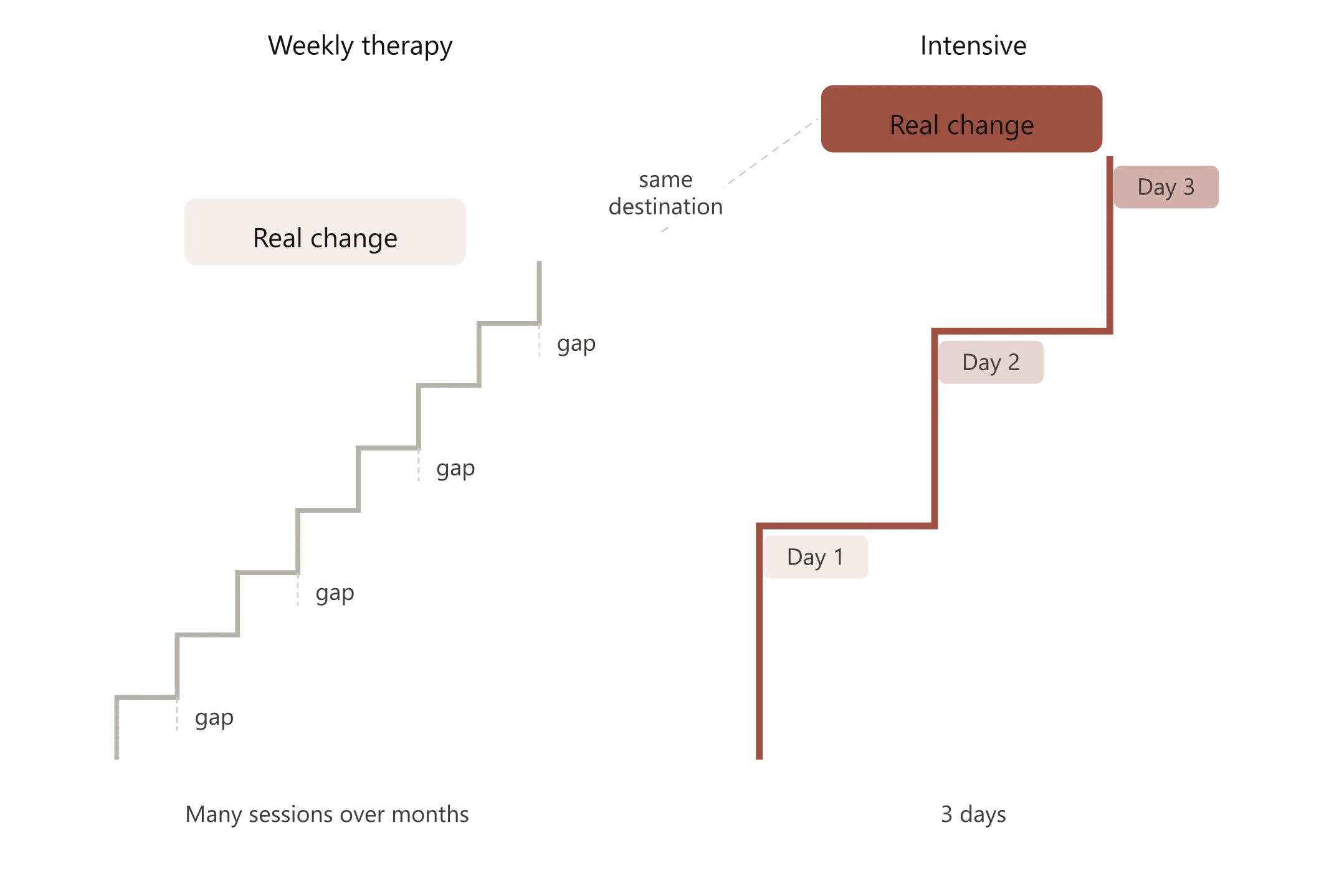
Weekly therapy: gradual integration over time.
Intensive Couples Therapy: concentrated depth in days. The right format depends on what your relationship needs right now.
When Weekly Therapy Isn't the Right Container
Couples therapy is where sustained transformation happens.
For couples doing ongoing growth work — learning each other more deeply, navigating life transitions, experiencing recurrent conflict, building new patterns over time — it is the right container. And it works.
But sometimes a relationship needs something different.
A concentrated intervention. A way to break a cycle that has become too automatic to shift one hour at a time.
That is what an intensive is for.
Not a replacement for ongoing work.
A surgical entry point into it.
The couples I work with most often are not resistant to weekly therapy.
They're resistant to drift.
They touch something important in minute 40 of a 50-minute session — and then carry it unresolved through two full weeks of back-to-back schedules, travel, and the thousand small demands of a full life before they can return to it.
That gap is where some breakthroughs go to die.
An intensive closes that gap.

What Intensive Couples Therapy Actually Is
Intensive couples therapy is the offsite version of couples work.
Same goal as weekly therapy. Completely different results.
Because you finally have enough uninterrupted time to get underneath the surface — and stay there until something actually shifts.
My intensives run one day (6 hours), two days (12 hours), or three days (18 hours). For couples seeking the deepest immersive experience, I also offer a once-a-year retreat in Venice and Sardinia, Italy — available to a very small number of couples each year.
Each couple and each partner complete a 60-minute individual intake separately — so I understand what each of you is protecting before we sit down together. The intensive itself is focused, tailored, and moves fast because the groundwork is already laid.
It closes with a dedicated integration session. Because what happens after the breakthrough matters as much as the breakthrough itself.
This is not about learning communication scripts.
It is not a workshop.
It is real clinical work — compressed into a container that actually fits your life.
What Most Couples Get Wrong About Their Problem
Almost every couple who comes to me believes they have a communication problem or a work-life balance problem.
They are right that something is broken.
They are almost always wrong about what exactly that is.
What looks like a communication problem is the tip of the iceberg.
Underneath it: a cycle so automatic neither partner can see it anymore. One person pursues, criticizes, protests. The other withdraws, disappears, or shuts down. Both people believe the problem is how they're talking.
What we discover together — almost every time — is that the real issue is what happens inside each of them when they try to reach for each other.
Old fear. Old pain. Fear of rejection. Fear of failing the person they love most.
The argument about work schedules, money, parenting, or ambition is rarely about those things.
It is about the meaning underneath them.
"You work all the time and you don't help with the kids" is actually: "I feel completely alone."
"You're never satisfied with me" is actually: "I feel like I can never get it right with you."
"You're always on your phone" is actually: "I don't know if I still matter in your inner world."
When you spend 50 minutes a week on this, you can touch it.
When you have six uninterrupted hours, you can transform it.
On Giacomo Leopardi, shattered illusions, and what a couple finally said out loud
I want to tell you about a couple I worked with not long ago.
They came in with the language I hear most often: We love each other, but we keep hurting each other in the same place.
Successful. Thoughtful. Privately exhausted.
She experienced him as emotionally absent. He experienced her as impossible to satisfy.
During the intensive, she said something cutting — not dramatic, just sharp enough to land in the exact place it always landed. I watched him go still. His face flattened. He started giving the kind of answer that sounds cooperative but is already a form of disappearance: measured, reasonable, bloodless.
In a weekly session, I would have stabilized that moment and returned to it the following week.
Instead, I stopped the conversation and said, very quietly:
"You're both talking as if this moment is about what was just said. I don't think it is."
He looked at me. Then looked down.
What I said next drew on something I carry from the 19th-century Italian poet and philosopher Giacomo Leopardi — who wrote with unusual precision about the suffering that comes not from life's hardships alone, but from the collapse of images we needed life to be.
The idea: we suffer not only from what is missing, but from the shattering of what we hoped this person — this love — would be.
So I turned to her:
"I wonder if part of what makes this so painful is not only what he does — but that he is not being the partner you had imagined he would be in these moments."
And to him:
"And I wonder if what happens for you is not just feeling criticized — but that the moment you disappoint her, you collapse under the weight of becoming, in your own mind, the inadequate man you most fear being."
That changed the room.
She began to cry — not angry tears. Quieter ones.
"Yes. I keep waiting for him to come toward me. And every time he doesn't, it's not just that I feel alone now. It's like I have to lose the hope all over again."
And then he said something I don't believe would have emerged in a fragmented weekly process:
"When I feel that I've failed you, I don't just feel guilty. I feel erased. And then I leave before you can see how ashamed I am."
That was the doorway.
Suddenly she could see that his withdrawal wasn't indifference. And he could see that her intensity wasn't cruelty. It was grief. It was the repeated collapse of an inner picture of love.
This is what enough time makes possible.
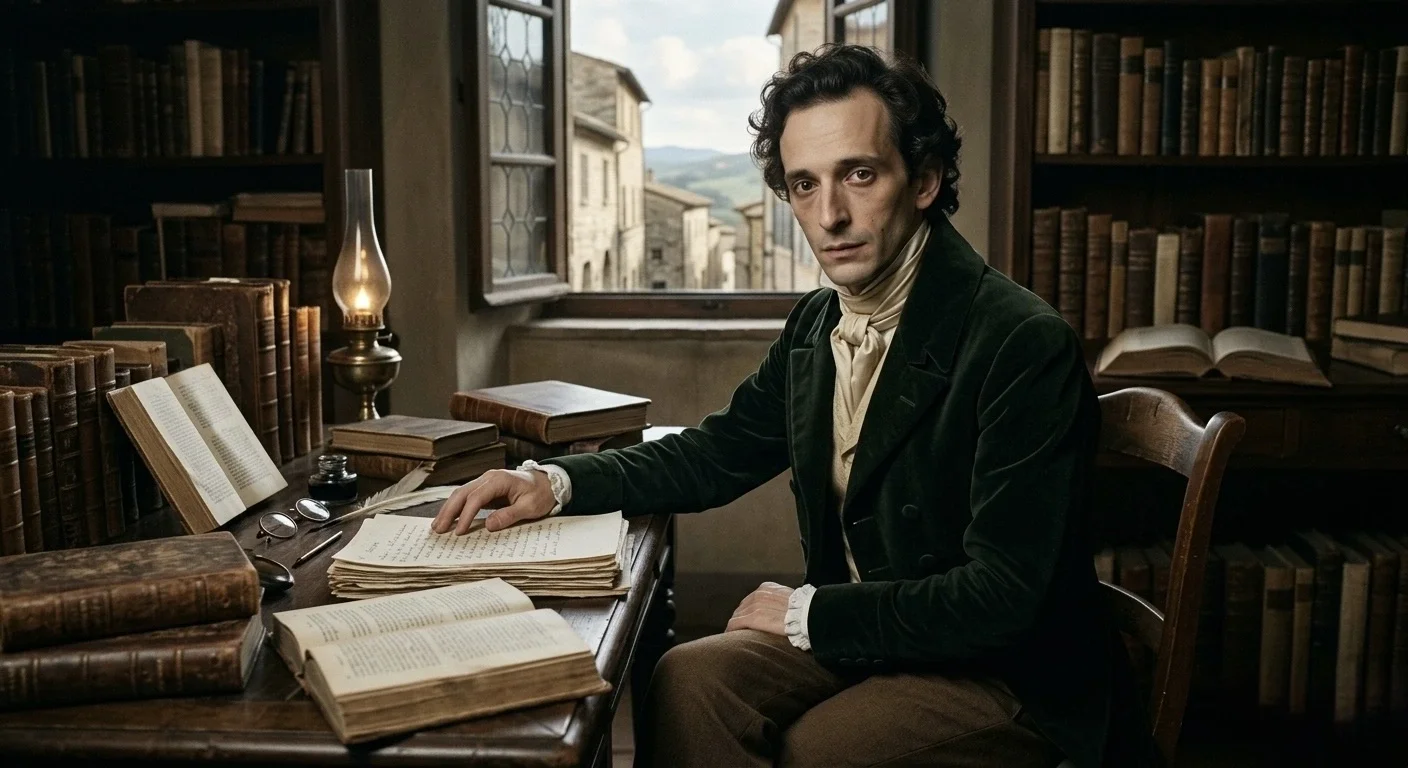
Leopardi’s philosophy, often called "Historical Pessimism," posits that human suffering isn't just about bad things happening; it's about the gap between our vast, infinite imagination of what love/life should be and the finite, limited reality of what it is.
In the Zibaldone, Leopardi argues that human beings have an infinite desire for pleasure. However, because we are finite beings living in a finite world, no specific object (a house, a career, a partner) can ever satisfy that infinity. This gap between our infinite longing and our limited reality creates Noia (often translated as boredom, but more accurately a deep existential void).
Intensive Couples Therapy Is Not For Everyone
Part of offering intensives responsibly is being willing to say: this is not the right container for everyone.
If there is active addiction, an ongoing affair that hasn't been resolved, significant mental health instability, or safety concerns — an intensive is not appropriate. Sometimes the most ethical intervention is not to intensify the work, but to slow it down and sequence it more carefully.
Some couples also arrive carrying ambivalence so significant that the intensive becomes a make-it-or-break-it moment.
That can be exactly right. Sometimes people need clarity more than they need hope.
But it requires honesty about what the work is actually for.
The Part That Determines Whether It Lasts
Most couples leave an intensive feeling something they haven't felt in a long time.
Not just hopeful. Seen.
Here is what I tell them next, because they deserve the honest version:
The breakthrough matters. The shift — when a cycle finally becomes visible, when old protection gets named, when two people see each other with something closer to the truth — that is real.
And it is not enough.
Insight without integration becomes a beautiful memory instead of a new way of being together.
The patterns that took years to build don't dissolve in a day, even a profound one.
This is why the post-intensive follow-up is built into every format I offer — not as an optional add-on, but as a clinical requirement. Integration has to be supported, not assumed.
The question I ask every couple before we close:
"How will you live differently now that you've seen more clearly?"
Opening the door matters enormously.
Relationships change when people keep walking through it — especially after the intensity is over.
A Twice-a-Year Invitation: Immersive Couples Therapy & Retreats in Italy
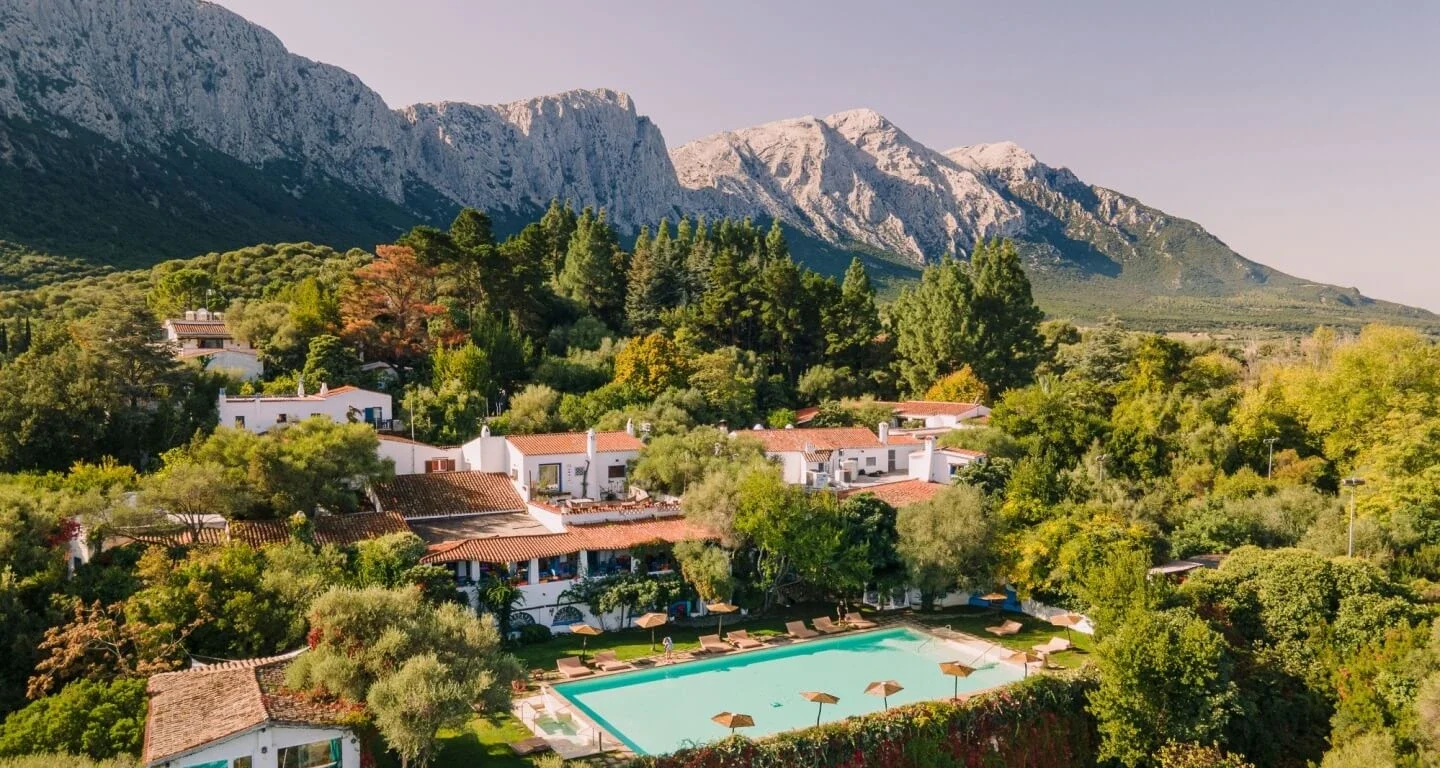
This is the setting for my most immersive intensives. This place captures the essence of an iconic Sardinian sanctuary where rugged nature meets high-art Mediterranean living a few minutes from cristalline waters. It isn't just a hotel; it’s a living gallery nestled in the heart of the island.
I am Italian — born of two islands, two entirely different landscapes.
My mother's family is Venetian. My father's is Sardinian.
I grew up between them, and both places shaped how I understand beauty, impermanence, and what it means to build something real with another person.
Twice a year, I bring a very small number of people into one of these places.
This is not a wellness retreat. No breakout rooms. No worksheets.
It is full clinical couples therapy — immersive, deeply personal, held inside a landscape that strips away everything ordinary.
Sardinia is elemental and ancient. The water there is a color that doesn't translate to photographs. The right place for couples who need to be removed from everything familiar and placed inside something that predates their problems entirely.
Venice is labyrinthine, melancholic, saturated with art and time. The right place for couples navigating grief, complexity, or the quiet erosion of connection.
Both retreats accommodate only a few selected people. That is not a marketing decision. It is a clinical one.
This offering is not open enrollment. Couples are selected through a brief application process — to ensure the format, the timing, and the work are the right fit for where you are. If this calls to you, I'd invite you to reach out and start that conversation. Inquire
For other details, visit my Investment page.
Frequently Asked Questions About Intensive Couples Therapy
-
1 day = 6 hours. 2 days = 12 hours. 3 days = 18 hours. For the Italy retreat, the arc spans multiple immersive days in Venice or Sardinia. Think of every format as a contained clinical arc — with a deliberate beginning, middle, and close. Full breakdown:intensive couples therapy page.
-
It depends on what the relationship needs. Weekly therapy is the right container for many couples — especially those doing ongoing growth work or who benefit from a slower, more gradual pace.
Intensives are better suited for couples who are stuck in a recurring cycle, time-constrained, recovering from a rupture or betrayal, or who feel the standard pace isn't creating enough momentum. Many couples describe intensives as doing in two days what they couldn't accomplish in two years of weekly sessions.
-
Expect to be genuinely seen — and to see each other differently. This is not a conflict-resolution workshop. We are not practicing communication scripts or learning how to fight better.
We are going underneath the cycle to find what is actually happening between you: the attachment injuries, the protection patterns, the grief, the longing, the fear.
The post-intensive follow-up session is built into every format because integration matters as much as the breakthrough.
-
Yes. I work primarily virtually — which means couples throughout California and beyond can access this format without travel. In-person intensives in San Francisco are available upon request. I also offer once-a-year immersive therapy retreats in Venice and Sardinia, Italy — limited to three couples, available by direct inquiry.
-
Yes. I work extensively with polyamorous, ENM, and multi-partner relationships, and the intensive format translates well to the complexity of non-monogamous dynamics — whether that's a dyad navigating the pressures of an open structure, or a throuple or polycule working through a specific rupture or recurring cycle.
If communication is where things are breaking down, this is also worth reading:why polyamorous communication fails — and how to fix it.
-
It may be if:
You're stuck in a pattern weekly therapy hasn't shifted
You're time-constrained and need depth over duration
You're at a crossroads and need clarity about whether and how your relationship can move forward
You've experienced a significant rupture — betrayal, disconnection, accumulated resentment — that needs focused repair
It may not be right if there is active addiction, an unresolved affair, significant mental health instability, or safety concerns. In those cases, I'll be honest with you — and point you toward what will actually help.
The best starting point is a free 20-minute consultation. It costs nothing. It tells us both what we need to know.
-
My intensives range from $2,600 to $15,000 per couple, depending on the format — from a focused 1-day session to an immersive multi-day retreat in Venice or Sardinia, Italy. For full details: Investment page.
Worth saying directly: for couples who have spent years in weekly therapy without breakthrough — or who are quietly losing time, connection, and peace to an unresolved pattern — the cost of an intensive is often modest compared to what they are already losing. Or the cost of divorce.
About the Author

Giulia P. Davis, LMFT & Founder Mycelia Therapy
(she/any pronouns)
Giulia P. Davis, LMFT is an Italian-born, San Francisco-based Licensed Marriage and Family Therapist and founder of Mycelia Therapy and Mycelia Coaching.
Before transitioning to clinical practice, she spent 15 years as a management consultant for Fortune 500 clients, building distributed teams across three continents and eventually founding her own consultancy. She brings that same systems-thinking lens to the work she does with couples — understanding relationships not just as emotional bonds, but as dynamic structures that can be diagnosed, interrupted, and rebuilt.
Giulia specializes in working with high-achieving couples, executives, entrepreneurs, and ENM/polyamorous relationships navigating disconnection, recurring conflict, and the particular exhaustion of a life that looks successful from the outside and feels depleted from within. Her intensive and retreat offerings are designed specifically for couples who need accelerated change.
Her work combines attachment theory, Emotionally Focused Therapy (EFT), Gottman frameworks, Relational Life Therapy (RLT), and Internal Family Systems (IFS). Formats offered: weekly therapy, intensives, and psychedelic-assisted therapy. → Learn more about Giulia