The Viral Mental Load Wake-Up Call for High-Achieving Couples
By Giulia P. Davis, LMFT | Mycelia Therapy | San Francisco, California

Cedric Thompson, former NFL player, and father
Cedric Thompson, someone trained to perform under extreme pressure, recently went viral after solo-parenting his three kids for eight days. His confession: "I had no idea it felt like this."
26 million people watched Cedric Thompson's video. And the reason it resonated isn't because it's about parenting.
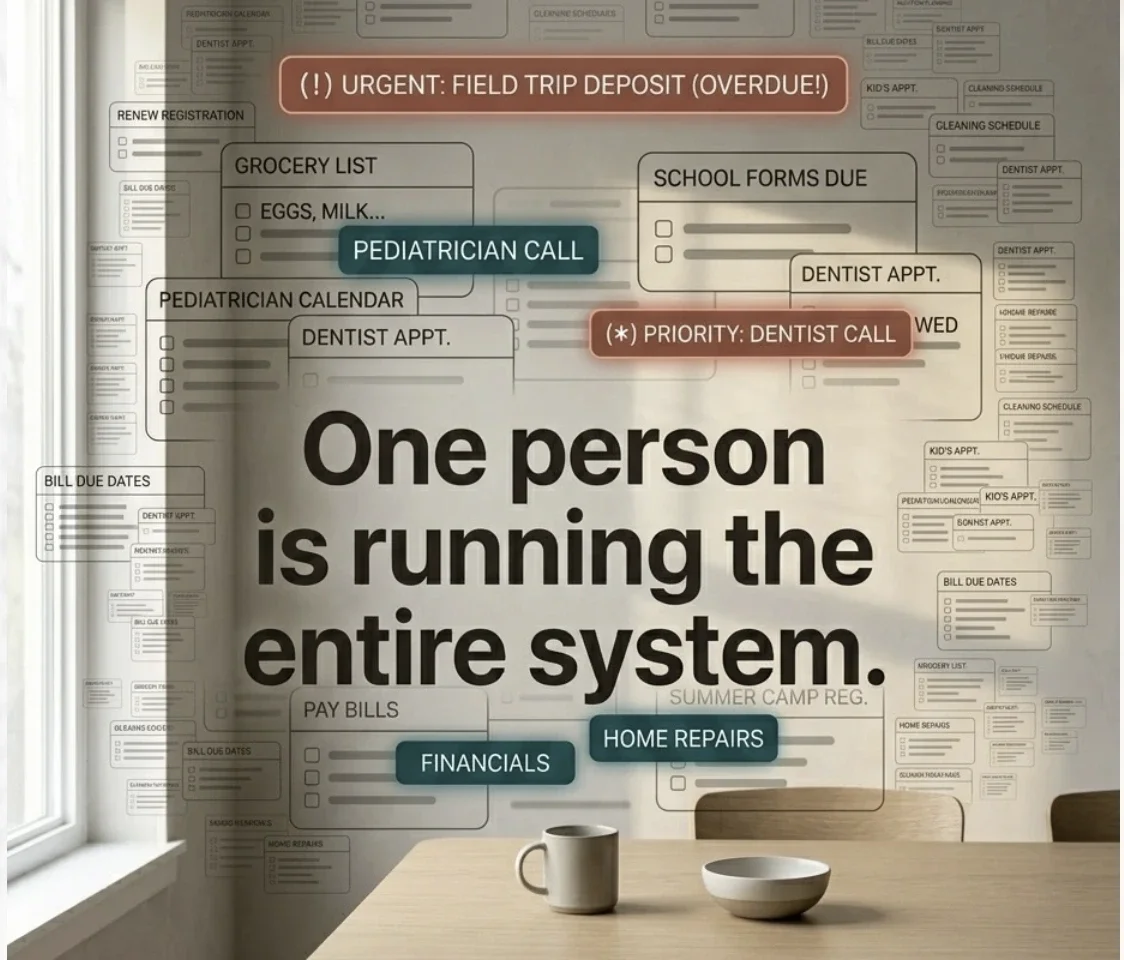
It's because it exposed something most high-functioning couples already feel but haven't named: one partner is running the entire domestic operating system, and the other partner doesn't even know the system exists.
I spent 15 years in management consulting for Fortune 500 clients. Now I'm a couples therapist. I see this pattern every week in my practice, and it's not what most people think it is.
“It’s not about who does more.
It’s about who has to think about everything.”
What Is the Mental Load, and Why Does It Hit High-Achievers Harder?
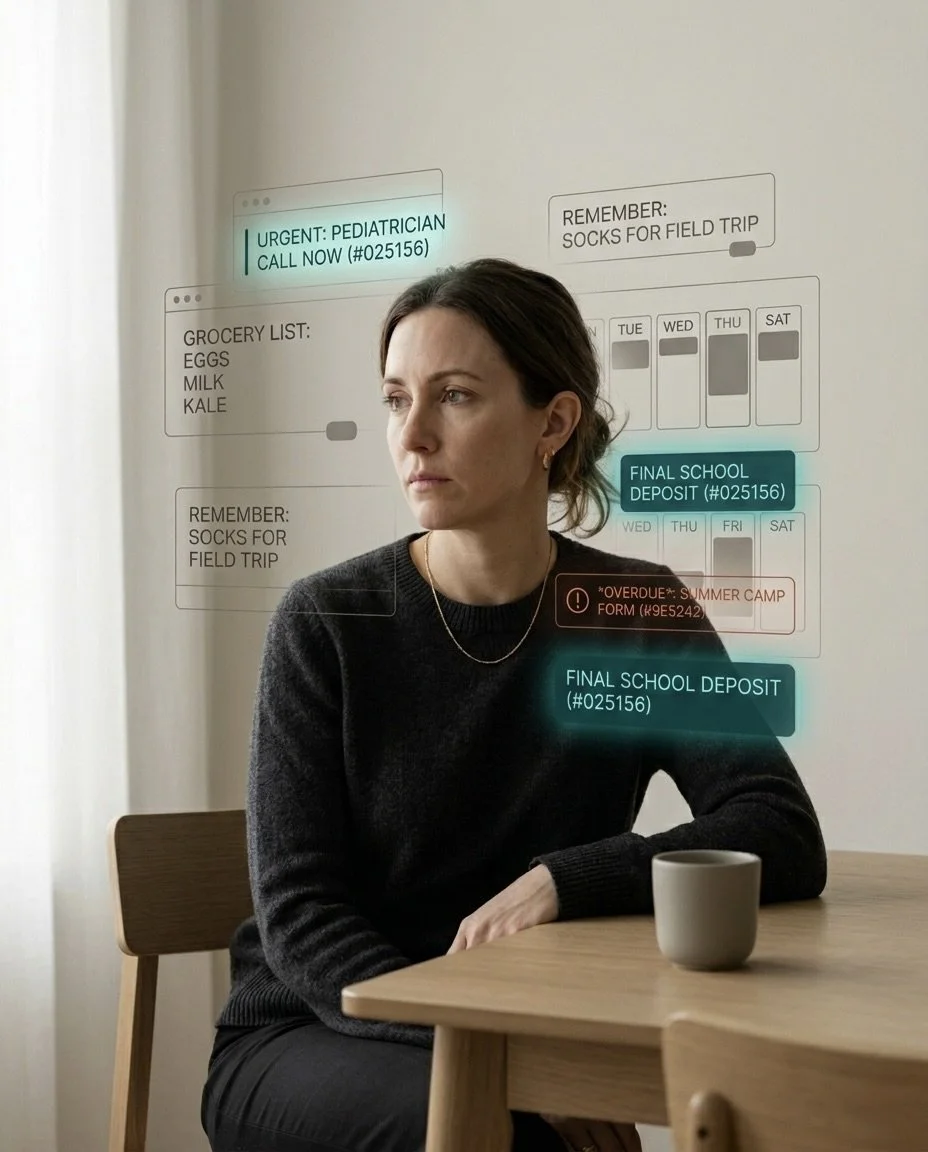
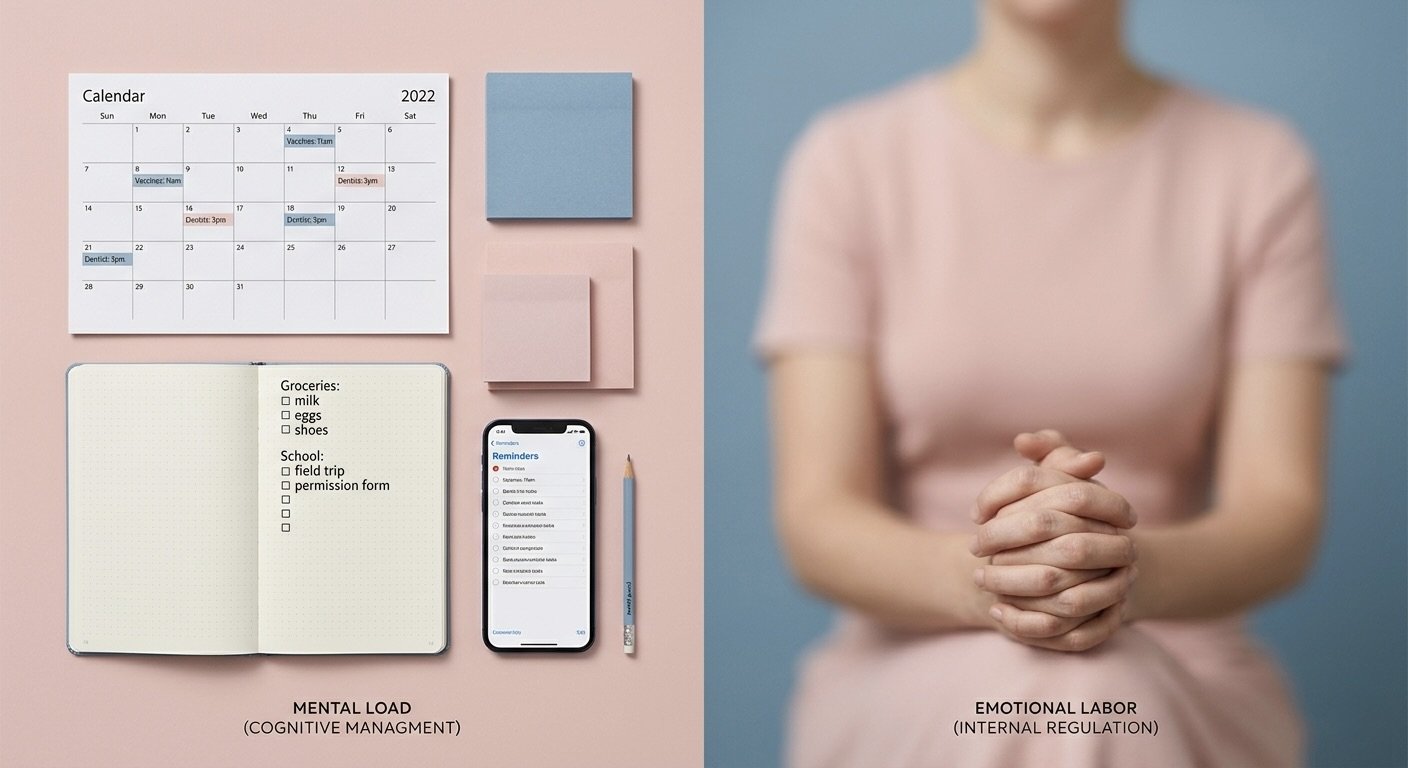
The mental load is the invisible cognitive work of managing a household: planning, remembering, anticipating, coordinating. It's knowing the pediatrician's number, tracking when the sheets were last washed, remembering that your kid needs new shoes before the field trip on Friday. It happens inside one partner's head, constantly, without a break.
Research backs up what most couples already sense. According to a study published in the National Library of Medicine, mothers handle 71% of household mental load tasks. Harvard researcher Allison Daminger found that in 80% of different-sex couples, women take on most of the cognitive labor: anticipating, researching, deciding, and monitoring.
But here's what makes this worse in high-achieving couples.
These aren't relationships where one partner "doesn't know how." Both partners are highly capable. Both manage complexity for a living. Both are used to running systems, leading teams, making decisions under pressure.
And yet, at home, only one of them is deploying those skills.
He runs a $20M division. She runs a team of 50.
“At home, only one of them knows when the pediatrician appointment is.”
The mental load in high-achieving couples isn't a competence gap. It's a deployment gap.
Both partners have the skills. Only one is using them at home.
What High-Achieving Couples Need to Know
--> Mothers handle 71% of household mental load tasks (National Library of Medicine, 2021). In high-achieving couples, the imbalance is compounded by identity fusion with competence.
--> The mental load isn't a communication failure. It's a systems failure where all critical household knowledge lives in one partner's head.
--> Addressing it requires making the invisible system visible, which is what couples therapy and intensives are designed to do.
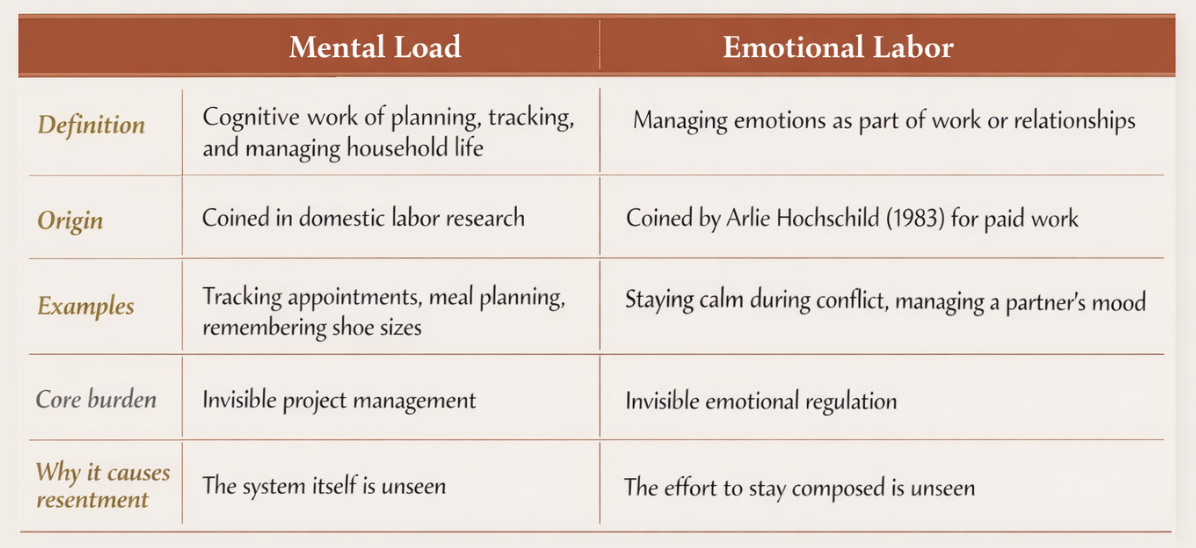
Mental Load vs. Emotional Labor
Why Do Dual-Career Couples Fall Into the Default Parent Trap?
Research from the University of Wisconsin found that many partners who appear disengaged at home hold jobs where they manage enormous complexity: surgeons, consultants, lawyers.
The issue isn't capability. It's that the "default parent" role, the partner who becomes the automatic first point of contact for everything household and child-related, forms without anyone choosing it. The school calls them first. They know every allergy, every shoe size, every after-school schedule. They carry the full map of domestic life in their head at all times, regardless of how demanding their professional life is.
The default parent trap is systemic, not personal. It's not about one partner being lazy or the other being controlling. It's about a system that grew without anyone designing it.
In consulting, I spent years watching what happens when all critical knowledge lives in one person's head with no documentation, no delegation, and no backup plan. In any organization, that's called a single point of failure. It gets flagged in the first audit.
“In any organization, that’s called a single point of failure. It gets flagged in the first audit. In a marriage, we call it Tuesday.”
The partner carrying the default role often can't stop, not because their partner refuses to help, but because their identity is fused with being the competent one. The one who notices. The one who remembers. Letting go of those tasks feels like letting go of who they are.
That's not a scheduling problem. That's a therapeutic one.
Why Isn't the Resentment Really About the Dishes?
High levels of mental load are linked to emotional exhaustion, sleep disturbances, and lower job performance (PMC, 2025). But the partner carrying the mental load isn't angry about tasks. They're angry about being unseen.
The invisible labor creates what I think of as compound resentment. Not one explosive betrayal. Not one dramatic failure.
Instead, it's thousands of unacknowledged micro-moments of carrying everything alone, accumulated over years. Each one is small. Together, they change the temperature of the entire relationship.
“Resentment in high-performing couples rarely comes from one big betrayal. It’s compound interest on years of invisible labor.”
Here's what I see in my practice. The overfunctioning partner eventually stops asking for help, because asking is its own form of labor. You have to explain, monitor, follow up. It's easier to do it yourself. The underfunctioning partner doesn't see the gap, because the system runs so smoothly it looks like nothing is happening.
Both partners are telling the truth. Neither is wrong.
But the relationship is paying the cost.
When all of one partner's cognitive and emotional capacity goes to managing the household, there's nothing left to invest in the relationship itself. This is how high-performing couples end up as efficient co-managers who've lost all intimacy. The household runs. The connection doesn't.
That's not burnout. That's emotional wealth depletion, and it happens slowly enough that most couples don't notice until the account is already overdrawn.
What Did Cedric Thompson's Video Actually Reveal?
With over 26 million views, Thompson's viral video wasn't about parenting tips. It was an admission that an entire system of labor had been invisible to him until he was forced to run it alone.
“I had no idea it felt like this to think about things that need to be done or things that I need to plan to do. It is so draining because I don’t even have the energy to take care of myself at all.
”
After eight days, his takeaway was simple:
“This experience gave me front-row seats, and now I genuinely see her perspective.
”
That phrase, "front-row seats," is exactly what good therapy does. It gives both partners direct visibility into each other's experience. Not through argument. Not through accusation. Through structured, supported work that makes the invisible system visible.
Most couples don't get there through an eight-day solo-parenting experiment. They can get there through intensive couples therapy, where there's enough time and focus to slow down, map the system, and see it together.
“Most couples don’t need a viral confession to see each other. They need someone to make the invisible system visible, before the resentment becomes the system.”
Case Study:
What Does the Mental Load Look Like in a Real Couple?

A dual-career couple came to me for an intensive. Both highly capable. Both carrying a great deal professionally. From the outside, they looked solid. Functional. The kind of couple people assume is doing well because everything appears to be working.
That was part of the problem. Everything was working. The house ran. The schedule held. Life moved forward. Nothing looked broken from the outside.
What was much harder to see was that one partner had quietly become the person carrying the entire household operating system, while the other was living inside that system without fully understanding what it took to keep it running.
They didn't come in saying, "We have a mental load problem."
They came in with a pattern many high-functioning couples know well: one partner felt chronically burdened, alone, and unseen. The other felt unfairly criticized and increasingly defeated. On the surface, it looked like a conflict about tone. Defensiveness. Irritation. The same argument in different clothes.
Underneath, it was a visibility problem.
One partner was carrying the mental architecture of daily life: noticing, anticipating, remembering, planning, tracking, deciding. Without pause and without acknowledgment. The other was not uncaring or checked out. They cared deeply. They participated. But they were participating inside a structure someone else was still building, monitoring, and managing.
What Shifted in the Intensive?
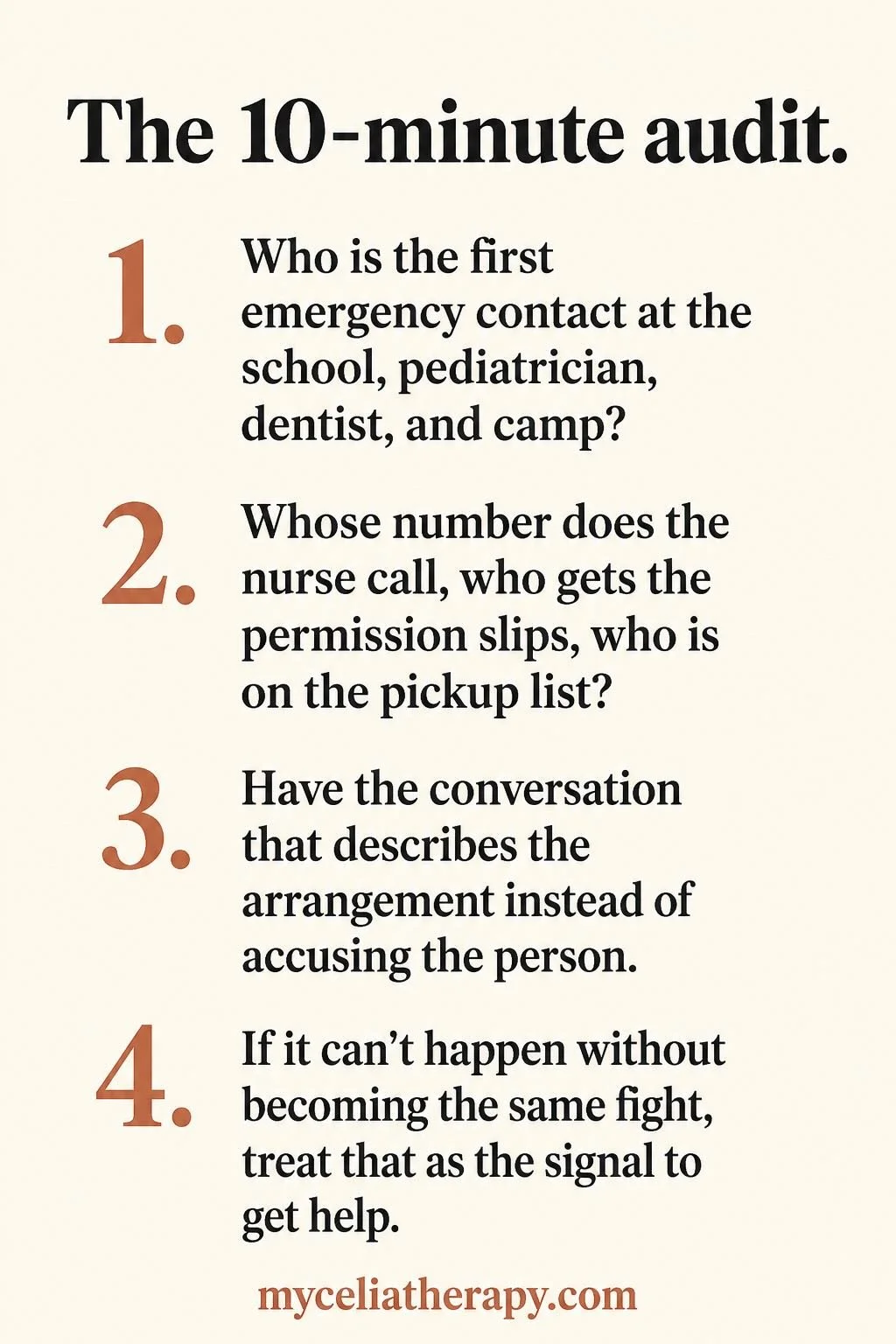
In the intensive, we slowed everything down enough to make the invisible visible. We looked not at tasks, but at ownership. Not who does what, but who notices. Who keeps track. Who remembers. Who anticipates. Who makes sure nothing falls through.
That changed the conversation.
The partner who had not fully seen the load became much quieter. More reflective. Less defensive. It was no longer an abstract complaint. For the first time, they could see the scale of what had been living in the other person's mind every day.
And for the partner who had been carrying it all, something shifted too. Not because everything was suddenly fixed, and not because the workload changed overnight, but because they were no longer alone inside the reality of it.
“The moment that changes everything isn’t when one partner agrees to do more. It’s when both partners can finally see the same system.”
How Do You Address the Mental Load (Not Just Talk About It)?
In 80% of different-sex couples, women take on most cognitive labor (Harvard/Daminger). The mental load won't be solved by a chore chart, an app, or a single conversation. It requires making an invisible system visible, and that's clinical work. Here is how I approach it with couples.
1. Make the system visible
Map every invisible task. Not as accusation, but as shared discovery. Most couples are stunned by the scope when they see it written out. This is what intensive formats are designed for. You cannot do a full systems audit in a 50-minute weekly session.
2. Separate identity from function
The overfunctioning partner needs to untangle "I carry everything" from "I am the competent one." When the mental load is identity-fused, letting go of tasks feels like losing a part of yourself. This is therapeutic work, not a logistics conversation.
3. Rebuild from shared ownership
Delegation isn't "helping." It's co-owning the operating system. Both partners need to be able to run the household independently. In organizational terms, that's redundancy, and it's the same principle that keeps companies resilient. The goal is not one partner acting as the household project manager while the other steps in when asked. The goal is shared ownership.
“Sometimes, you can’t untangle years of accumulated invisible labor in 50 minutes a week. That’s why intensives exist.”
Frequently Asked Questions
-
The mental load is the invisible cognitive work of planning, remembering, anticipating, and coordinating everything a household and family needs to function. It includes tracking appointments, noticing when supplies run low, remembering school deadlines, and managing the social calendar. This work often goes unrecognized because it happens inside one partner's head.
-
It's rarely about willingness. In most couples, especially high-achieving ones, one partner gradually absorbs more cognitive household tasks because they notice things faster, have higher standards, or find it easier to do it themselves than to delegate. Over time, this becomes self-reinforcing: the more one partner manages, the less the other partner even sees there's a system to manage.
-
The resentment isn't about tasks. It's about being unseen. When one partner carries the full cognitive weight of household management for years without acknowledgment, the exhaustion compounds. It becomes the backdrop of the relationship: a low-grade, persistent sense of carrying everything alone, even in a partnership.
-
Yes, specifically therapy that makes the invisible system visible. A skilled couples therapist helps both partners see the full scope of cognitive labor, understand why it's distributed the way it is, and restructure shared ownership. Intensive formats are particularly effective because they allow enough time to do a thorough systems audit rather than surface-level conversations.
-
The default parent is the partner who is the automatic first point of contact for all child and household decisions. The one the school calls. The one who tracks the pediatrician schedule. The one who knows every allergy and clothing size. This role often falls on one partner regardless of their professional demands, and it creates an asymmetry that erodes intimacy over time.
-
Emotional labor, coined by sociologist Arlie Hochschild, originally referred to managing emotions as part of paid work. Mental load is specifically the cognitive work of household and family management: planning, anticipating, tracking, and coordinating. They overlap, but mental load is more about the invisible project management of domestic life.
-
The mental load conversation isn't about fairness. It's not about chore distribution. It's about whether both partners can see the same system.
In high-functioning couples, the invisible labor often stays invisible precisely because the partner carrying it is so good at making everything look effortless.
“The partner carrying the mental load often makes everything look effortless. That’s not a compliment. It’s a collapse waiting to happen.”
If this post described your relationship with uncomfortable precision, if you're the one carrying the operating system or the one who just realized you didn't know it existed, a couples intensive is often the most efficient path forward.
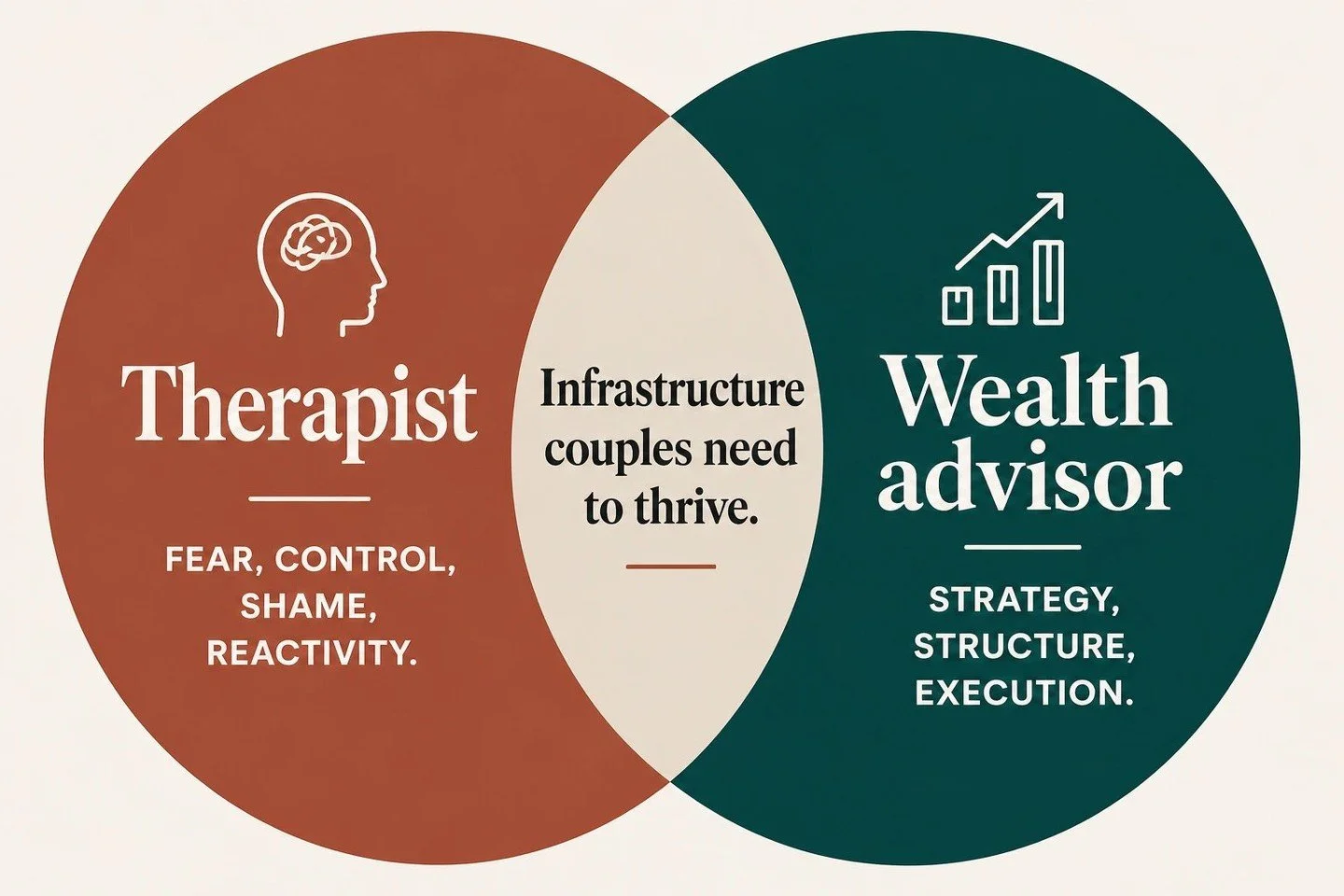
Mycelia Therapy offers couples therapy and intensive couples therapy designed for high-performing couples throughout California.
I have limited availability for intensives this quarter. Schedule a free 20-minute consultation to see if this format fits your situation.
About the Author

Giulia P. Davis, LMFT #157653 & Founder Mycelia Therapy
(she/any pronouns)
Giulia P. Davis, LMFT is an Italian-born, San Francisco-based Licensed Marriage and Family Therapist and founder of Mycelia Therapy and Mycelia Coaching.
Before transitioning to clinical practice, she spent 15 years as a management consultant for Fortune 500 clients, building distributed teams across three continents and eventually founding her own consultancy. She brings that same systems-thinking lens to the work she does with couples — understanding relationships not just as emotional bonds, but as dynamic structures that can be diagnosed, interrupted, and rebuilt.
Giulia specializes in working with high-achieving couples, executives, entrepreneurs, and ENM/polyamorous relationships navigating disconnection, recurring conflict, and the particular exhaustion of a life that looks successful from the outside and feels depleted from within. Her intensive and retreat offerings are designed specifically for couples who need accelerated change.
Her work combines attachment theory, Emotionally Focused Therapy (EFT), Gottman frameworks, Relational Life Therapy (RLT), and Internal Family Systems (IFS). Formats offered: weekly therapy, intensives, and psychedelic-assisted therapy.