Roommate Marriage: When Two Busy People Stop Feeling Like Partners
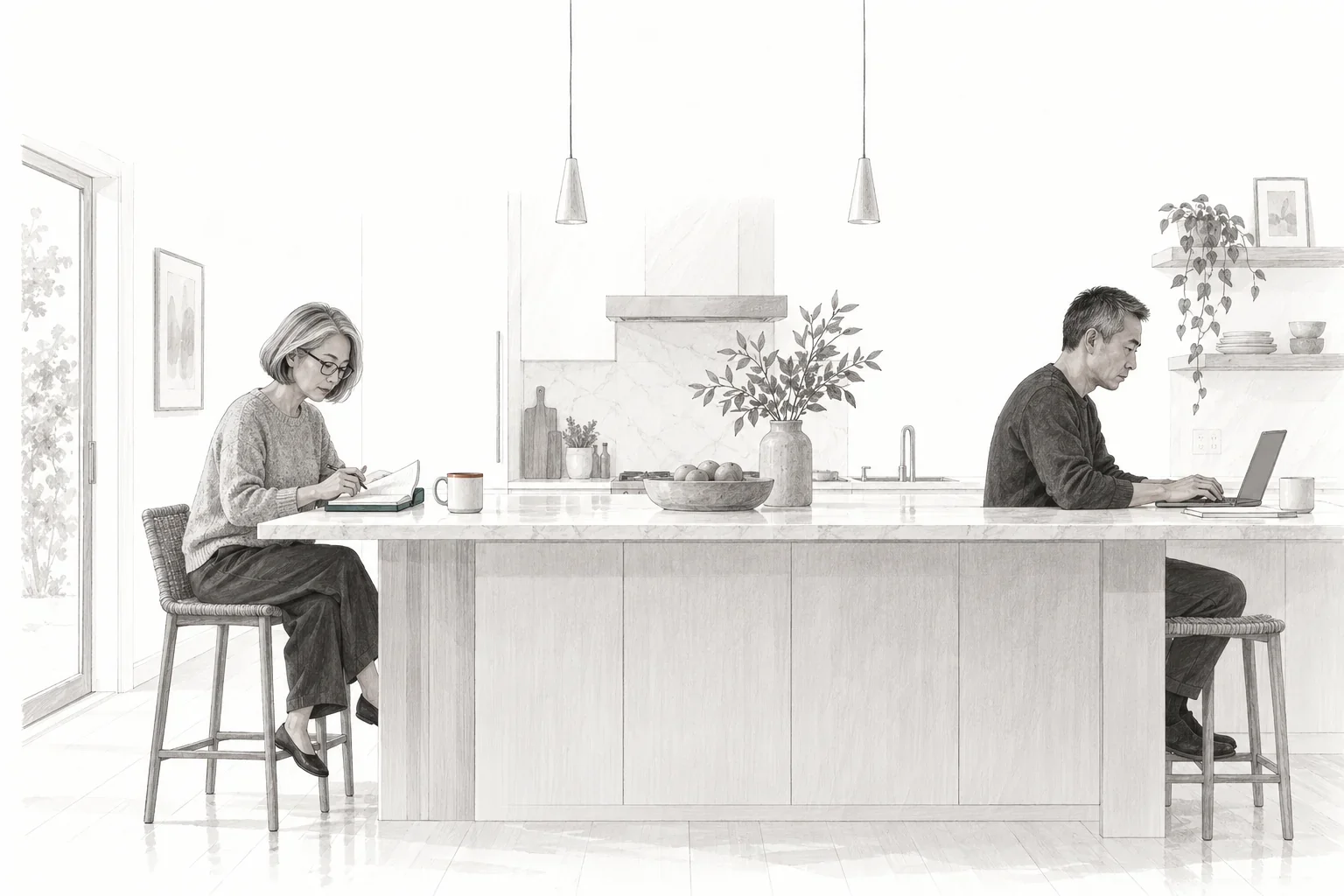
It’s Sunday night, and the two of you are going through the week ahead. Who has the 7 a.m. call on Tuesday? Did the contractor ever confirm? It takes twenty minutes and it goes well. Later, one of you realizes it was the longest conversation you’ve had all week.
The bills are paid and the two of you rarely fight. You also can’t remember the last time you talked about something that wasn’t on the calendar. Many couples call this a roommate marriage.
I spent 15 years in management consulting for Fortune 500 clients before I became a couples therapist, and many of the couples I see in San Francisco describe this exact week.
A couple can run a household well and still drift apart, because nothing a well-run household tracks tells you how close you are.
Key takeaways
A roommate marriage runs smoothly as a household while the partners feel like co-managers.
Busy couples drift into it by bringing work habits home, especially talking only when something needs fixing.
A calm marriage can still lose ground. In one long-term study, feeling in a rut predicted lower satisfaction nine years later.
A busy season lifts when the pressure does. A pattern stays.
Couples therapy helps about 70% of couples who receive it.
What is a roommate marriage?
A roommate marriage is a relationship where the household still runs well but the partners have stopped feeling like a couple. You share a home, money, children and a calendar, and the affection and curiosity that made you partners have thinned out.
Roommate syndrome is the informal name many people search for. It is not a clinical diagnosis, and therapists more often talk about emotional disconnection in marriage. It describes a pattern I see often in couples with demanding careers, and it usually builds slowly enough that neither partner can say when it started.
The pattern deserves attention even when the relationship feels calm. In a study that followed 123 married couples, the more often partners felt their marriage was in a rut in year seven, the less satisfied they were nine years later. The researchers linked the effect to a loss of closeness.
A calm house and a close marriage are measured by different things. Busy couples tend to check only the first.
Why do busy couples drift into a roommate marriage?
Busy couples usually drift into a roommate marriage by running their home with the habits that work at their jobs. Each habit makes sense on its own. Together they remove the unplanned, low-stakes conversations where closeness used to happen.
In consulting, a lot of program management runs on exception reporting. If a workstream is on track, nobody meets about it, and leaders spend their time on whatever is late or over budget. That saves hours every week. At home, the same habit means the two of you talk when the dishwasher breaks or the nanny gives notice, and stay out of each other’s way when things are fine.
Run a marriage by exception and you only talk when something breaks. Closeness used to live in the conversations nobody needed to have.
Couples also split the house into domains, the way a leadership team splits a business. One of you owns school and activities, and the other owns money and the house. Each domain runs better with a clear owner. The side effect is that you rarely need to talk about most of your life, and the conversations that remain sound like status updates.
Pulling back after a hard day is part of this, and on its own it is healthy. In a study of air traffic controllers, on heavy-workload days, controllers withdrew more at home and expressed less anger on evenings when their spouses were supportive. The researcher suggested that withdrawing helps a stressed person return to baseline. A quiet evening after a brutal day is recovery. The pattern to watch for is when every evening becomes recovery and neither of you comes back out.
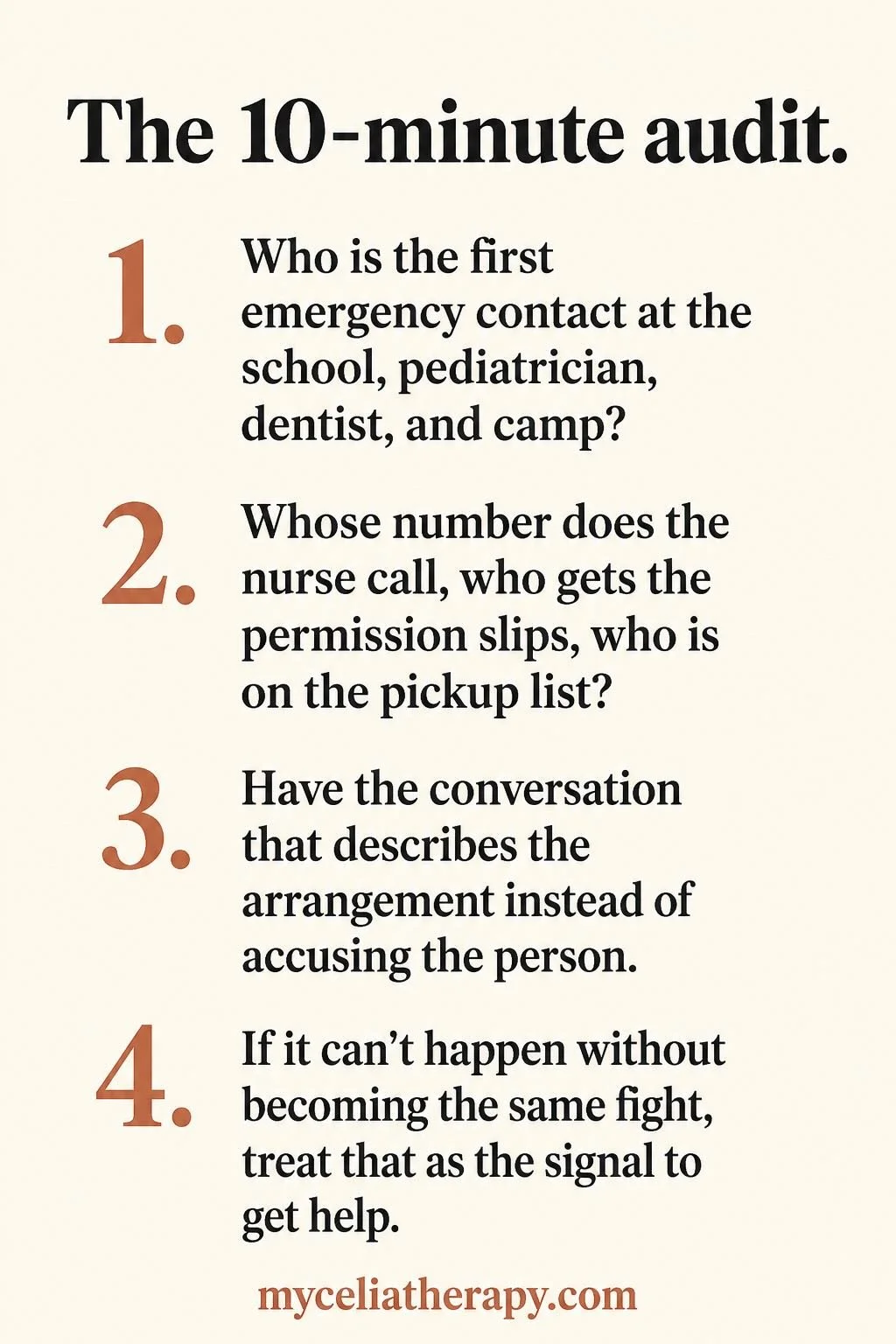
These habits rarely land evenly. Often one partner holds more of the household’s moving parts, sometimes on top of an equally demanding job. That partner becomes the one who notices what is late and raises it, and the other partner mostly hears about problems.
Over time the first partner can feel like a project manager with no team, while the other feels that nothing they do is right and stops offering. Each of them is describing the same distance from a different seat. If the imbalance itself is the sore point, my post on the mental load in high-achieving couples goes deeper.

What are the signs your marriage feels like roommates?
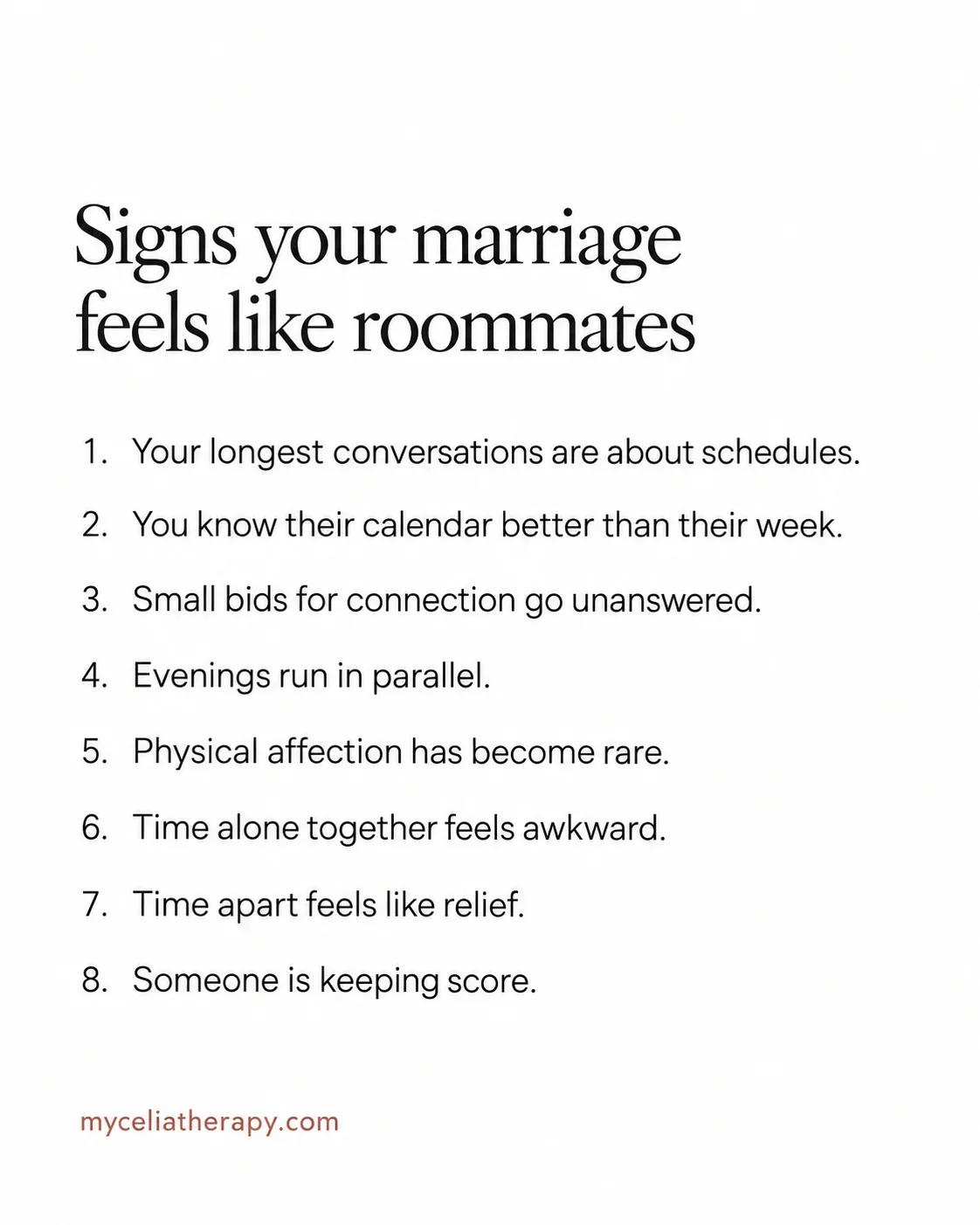
The clearest sign is that almost every conversation you have is about logistics. Most couples recognize one or two of the signs below during a hard month. Several of them, lasting through calmer months, point to a roommate pattern.
Your longest conversations are about schedules. Think back over the last three days and count the conversations that had nothing to do with kids, money, the house or travel.
You know your partner’s calendar better than their week. You could name their Thursday meetings, and you aren’t sure what is worrying them at work right now.
Small bids go unanswered. John Gottman’s research calls these moments bids: a link sent, or a hand on a shoulder on the way past. In a roommate pattern, both partners send fewer of them, because the last few landed on a screen.
Evenings run in parallel. Two screens, sometimes in two rooms, until one of you says goodnight.
Physical affection has become rare or purely functional, and neither of you brings it up.
Time alone together feels awkward. A dinner without the kids fills up with logistics, or with a silence neither of you enjoys.
Time apart feels like relief. When one of you travels, the house runs on one set of rules and nobody has to negotiate.
Someone is keeping score. The division of household work has turned into a running tally, spoken or unspoken.
Is it a busy season or a roommate pattern?
A busy season lifts when the pressure does, and a roommate pattern stays. If a product launch or a new baby has crowded out closeness, you should feel some of it return within a week or two of things easing. When nothing returns, you are looking at a pattern.
Four questions help you tell the difference.
Does it lift when the pressure lifts? The first days of a vacation are the simplest check. In my experience, couples in a busy season feel some ease come back in a few days. Couples in a roommate pattern often turn the vacation itself into a logistics project, or find they have little to say once the kids are asleep.
Do both of you see it? When one partner feels the distance and the other says everything is fine, that gap needs attention in its own right.
Can you talk about it? Raise it once, calmly, and notice whether the conversation opens up or ends in an argument or a shrug.
Is something building underneath? Watch for resentment about who carries the house, and for a sex life that stopped without a conversation.
A busy season lifts when the pressure does. If the first days of vacation feel as distant as a Tuesday, you are looking at a pattern.
When should a roommate marriage get professional help?
Consider couples therapy when the distance has lasted through a quieter stretch, or when talking about it has gone badly more than once. Couples therapy helps most couples who try it. According to a 2012 review of the research, it positively affects about 70% of couples who receive it.
If your answers to the four questions were mostly reassuring, start on your own. My post on work-life balance as a couple lays out six practices for protecting your connection through demanding years, and many couples in a busy season need nothing more.
Book a consultation when any of these is true:
The distance has lasted for months, including stretches when work was calmer.
One of you wants more closeness and the other says nothing is wrong.
Raising the subject leads to the same argument every time, or to silence.
Resentment about the division of work has become the main thing you feel toward each other.
Physical intimacy has stopped and neither of you can talk about it.
One of you has started picturing life apart, or finding closeness somewhere else.
In my practice, couples who go ahead after the free 20-minute consultation start with a joint intake session, and then I meet with each partner individually. In a roommate pattern, those individual meetings matter a great deal.
Partners in a roommate marriage often hold two different explanations for the same distance, and neither has said theirs out loud.
If you are weighing whether to start, my guide on how to choose a couples therapist covers what to ask on the first call.
A hypothetical example: the couple with the color-coded calendar
Amara and Jonas are a hypothetical couple. They are a composite of patterns I see often, and none of the details belong to a real client.
The problem. They are in their mid-40s, married 14 years, with children aged 9 and 12. Amara is a hospital department chief. Jonas runs sales for a software company and travels most weeks. Their shared calendar is color-coded by child and by parent, and they review it together for twenty minutes every Sunday night.
They almost never fight. Amara handles most of the children’s schedules on top of her own job, and she stopped asking for help because asking felt like one more task. Jonas noticed the house ran smoothly without his input and pulled back. They book a consultation after an anniversary weekend away, when they ran out of things to say by Saturday lunch.
The pursuit. In individual meetings, a therapist might hear two explanations for the same distance. Amara believes Jonas has lost interest in family life. Jonas believes Amara prefers running things alone and would treat his help as an interruption. Neither has said this to the other.
Joint sessions would bring both explanations into the room, then turn to practical changes. Jonas could take full ownership of one domain, start to finish, so Amara can stop tracking it. The two of them could protect a short daily conversation that has nothing to do with the calendar.
The payoff. A couple like Amara and Jonas would still have a busy house. What would change is that each understands why the other pulled back, and they have a regular place in the week where they talk as partners again.
If that example sounds familiar, I work with a limited number of California-based couples, virtually across the state and in person in San Francisco. You can book a free 20-minute consultation or read more about how I work in couples therapy. Couples whose calendars keep swallowing weekly sessions sometimes start with an intensive, and I compared the two formats in whether a couples therapy intensive is worth it.
How do you tell your partner you feel like roommates?
Start with what you miss, and say it at a time when nothing needs to be decided. A sentence about your own experience gives your partner room to respond. A list of what they stopped doing usually starts a defense.
Skip the Sunday calendar review and the last ten minutes before sleep. A walk or a slow weekend breakfast works better. You might say: “I miss you. We run everything well, and I feel like we barely talk about anything else. I’d like to figure out what happened, together.”
Expect your partner to see it differently. One of you may have felt the distance for a year while the other was relieved that home felt calm. Both views are useful, and a first conversation only needs to get them both on the table.
Frequently asked questions
What is roommate syndrome?
Roommate syndrome is an informal term for a long-term relationship where partners still share a home and responsibilities but feel more like housemates than a couple. It usually develops gradually, often during years of demanding careers or young children.
Is it normal for a marriage to feel like roommates sometimes?
Yes. Many long-term couples go through stretches where logistics crowd out closeness, especially around a new baby or a job change. It becomes a concern when the distance stays after the pressure eases.
Can a roommate marriage be fixed?
Often, yes, especially when both partners want more closeness and act before resentment sets in. A 2012 research review found couple therapy positively affects about 70% of couples who receive it. The earlier you address the pattern, the more options you have.
Does feeling like roommates mean we’ve fallen out of love?
Not necessarily. Many couples in a roommate pattern still care about each other a great deal and have stopped making room for each other. How each of you feels when you picture changing that is a more useful signal than trying to measure the love itself.
Should we try weekly couples therapy or an intensive?
Weekly sessions suit couples with steady schedules and time to change gradually. An intensive suits couples whose schedules keep collapsing weekly appointments, or who want to understand the pattern quickly before deciding what comes next.
Making room for each other again
Two capable people can run a demanding life well and still leave closeness off the list of things they check. Noticing it early gives you more options, and it says nothing bad about either of you.
If you are a California-based couple and this post described your house, I keep a limited number of consultation slots open each month. Book a free 20-minute consultation. Bring your calendars if that’s easiest, and we’ll spend the time on everything that isn’t in them.
This information is educational and is not a substitute for professional help. If you or your partner are in crisis or thinking about suicide, call or text 988 to reach the 988 Suicide and Crisis Lifeline.
About the Author

Giulia P. Davis, LMFT #157653 & Founder Mycelia Therapy
(she/any pronouns)
Giulia P. Davis, LMFT is an Italian-born, San Francisco-based Licensed Marriage and Family Therapist and founder of Mycelia Therapy.
Before transitioning to clinical practice, she spent 15 years as a management consultant for Fortune 500 clients, building distributed teams across three continents and eventually founding her own consultancy. She brings that same systems-thinking lens to the work she does with couples, understanding relationships not just as emotional bonds, but as dynamic structures that can be diagnosed, interrupted, and rebuilt.
Giulia specializes in working with high-achieving couples, executives, entrepreneurs, and ENM/polyamorous relationships facing disconnection, recurring conflict, and the particular exhaustion of a life that looks successful from the outside and feels depleted from within. Her intensive and retreat offerings are designed specifically for couples who need accelerated change.
Her work combines attachment theory, Emotionally Focused Therapy (EFT), Gottman frameworks, Relational Life Therapy (RLT), and Internal Family Systems (IFS). Formats offered: weekly therapy, intensives, and psychedelic-assisted therapy.